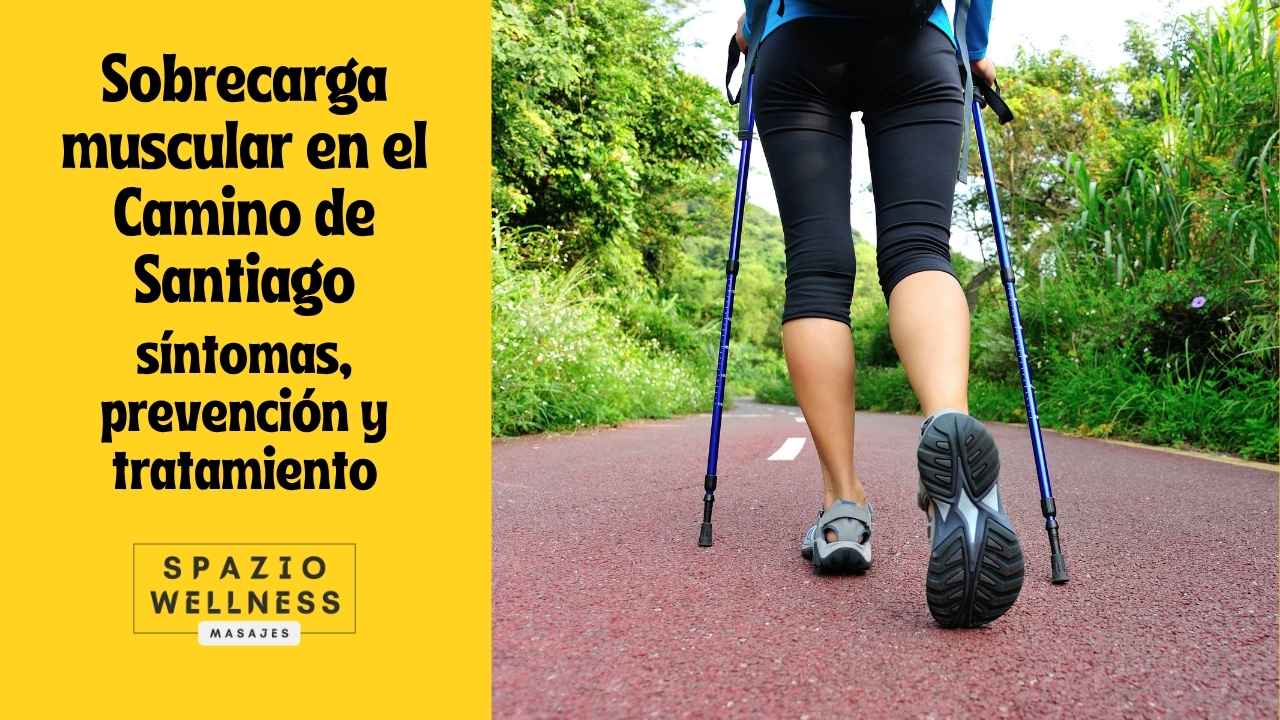
Walking dozens of kilometers a day on asphalt, cobblestone paths, and constant inclines takes its toll. As a physiotherapist in Santiago and a pilgrim who knows firsthand the wear and tear that legs endure day after day, I know that Muscle overload on the Camino de Santiago It is, by far, the most frequent reason for consultation among walkers when they arrive at the Obradoiro (a few meters from where the solution is found, by the way… but I’ll tell you about that later ).
Muscle overload is a direct warning that your body has reached its limit. In this article, I’ll explain the key symptoms to identify it early, how to prevent it while hiking, and the best treatments to help you recover afterward.
What is muscle overload and why does it occur in pilgrims?
Muscle overload is a sustained (and involuntary) muscle contraction in response to continuous exertion for which the muscle was not fully prepared. When you walk 20 or 30 kilometers daily with extra weight or on uneven terrain, the muscle fibers eventually become overwhelmed, leading to the muscle’s own defense mechanism..
Pain, stiffness, and loss of flexibility (which I’ll discuss later) are the warnings from that muscle. And also its defense: pain prevents you from moving, which is what the muscle needs to recover..
If the body doesn’t have enough rest between stages to repair these micro-damages, the muscles shorten, lose elasticity, and hinder local blood circulation. This leads to a buildup of metabolic toxins that keeps the muscles tense and rigid.
During the Camino, the muscle groups that suffer the most from this overload are:
- Quadriceps: Especially punished on steep descents to slow the impact of the body.
- Gemini and soleus: They withstand the propulsion phase in each stride and suffer intensely on the climbs.
- Hamstrings: Responsible for stabilizing the hip and knee on uneven terrain.
- Lumbar and paravertebral muscles of the back: They withstand the constant strain of maintaining an upright posture, even more so if you are carrying a backpack.
Symptoms of muscle overload on the Camino de Santiago
Knowing how to differentiate between normal fatigue from exertion and true fatigue symptoms of muscle overload On the Camino de Santiago, it’s crucial to be aware of the following warning signs to avoid more serious injuries, such as muscle tears or chronic tendinitis. Pay attention to these signs during your stage:
- Feeling of heaviness or “blockage”: You feel stiff legs, especially when starting to walk after a rest or when getting up in the morning.
- Dull, constant pain: It is not a sharp, instantaneous stabbing pain, but a diffuse pain in the muscle belly that increases when pressure is applied to the area or when the muscle contracts.
- Loss of flexibility and range of motion: You notice difficulty fully extending your leg or flexing your ankle naturally.
- Hypersensitivity to touch: The muscle feels hard, corded, or has painful bulges (the famous contractures or trigger points).
If you notice that these symptoms are accompanied by local inflammation or sharp pain when putting weight on the foot, you may be facing a more serious problem..
How to prevent muscle overload during the stages
The best way to combat physical discomfort on the trail is prevention. Following muscle care guidelines before and during your hike will save you days of suffering.
1. Prior physical preparation
A suitable physical preparation of the pilgrim It should begin at least two months before departure. Strengthening the lower limbs through squats, lunges, and balance exercises strengthens muscle fibers and makes them more resistant to metabolic fatigue.
2. Effort dosage and stride rhythm
Avoid starting stages at an excessive speed. Warm up by walking at a gentle pace for the first two or three kilometers to increase your muscle temperature. Maintain a short, fluid stride; taking excessively long steps puts undue strain on the hip flexors and hamstrings.
3. Free your back from excess weight
Carrying a heavy backpack shifts your center of gravity and forces your back and leg muscles to work under constant strain. If you find yourself becoming too fatigued, using a luggage transfer service is a perfectly sound medical decision. In this article, we discuss… What to pack in your backpack during the Camino de Santiago.
4. Hydration and salt replacement
A dehydrated muscle, or one lacking minerals like magnesium and potassium, contracts much more easily. Drink small amounts of water regularly and replenish electrolytes at the end of the day.
“Clinical tip: After completing the stage, take a 15-minute active rest by elevating your legs against a wall or cushion. This facilitates venous return and helps drain metabolic waste products accumulated in the tissues.”
In this article we show you some Nutrition tips for the Camino de Santiago.
Treatment and recovery from overload upon arrival in Santiago
When muscle overload occurs in our body, rest is not always enough. Trying to “mask” the pain with anti-inflammatories to keep walking only increases the risk of developing harmful postural compensation.
The correct approach combines:
- Cryotherapy (ice): Applying local cold for 10-15 minutes to the most congested areas helps reduce inflammation and numb the pain after exertion.
- Gentle stretching: Stretch gradually, without bouncing and never reaching the point of sharp pain. Hold the position for 30 seconds to allow the fascia to relax.
- Manual therapy and therapeutic massage: It is the most effective tool for eliminating muscle contracture.
Upon arriving at the Plaza del Obradoiro, next to the Cathedral of Santiago, the body feels relaxed and experiences a sudden drop in tension. This can then lead to joint and muscle stiffness. Fortunately, as I mentioned at the beginning of the article, the solution lies right next to the Plaza del Obradoiro: our Spazio Wellness massage center is specialized in the Pilgrim massage for walkers arriving in Santiago de Compostela.
We know perfectly well the state of the pilgrim’s body and we work in depth on the overloaded muscles to eliminate contractures (or at least minimize them)..